Support our educational content for free when you purchase through links on our site. Learn more
🥊 Muay Thai vs Kickboxing: The 2026 Evolution of MMA Striking

Ever watched a UFC fight and wondered why some fighters throw elbows while others stick to rapid-fire combinations? The answer lies in the fascinating evolution of MMA striking, a battlefield where the ancient “Art of Eight Limbs” (Muay Thai) collided with the fluid, punch-heavy science of Kickboxing. Here in Florida, we’ve seen everything from local gym sparring sessions to the grandest stages of the octagon, and one thing is clear: the days of choosing just one style are over. The modern champion isn’t just a Muay Thai fighter or a kickboxer; they are a hybrid warrior who knows when to clinch like a Thai legend and when to dance like a Dutch master.
In this deep dive, we’ll unravel how decades of rule changes, cross-training, and brutal in-cage experimentation have reshaped the way we strike. We’ll reveal why the low kick became the silent killer of the sport, how the clinch transformed from a pause into a weapon, and which legendary fighters defined this new era. By the end, you’ll understand exactly why Anderson Silva’s front kick or Israel Adesanya’s footwork changed the game forever, and you’ll have the answers to the ultimate question: Which striking style truly dominates the modern cage?
Key Takeaways
- The Hybrid is King: Modern MMA striking is no longer about choosing between Muay Thai or Kickboxing; it’s about blending the clinch and elbows of Muay Thai with the speed and combinations of Dutch Kickboxing.
- The Clinch is Critical: Unlike in traditional kickboxing, the Muay Thai clinch is a dominant position in MMA used to neutralize takedowns and deliver devastating knees.
- Adaptation is Survival: Fighters who fail to adapt their stance (from square to bladed) or learn to check kicks while defending takedowns are quickly eliminated from contention.
- Leg Kicks Changed Everything: The evolution of the low kick from a scoring tool to a fight-ending weapon forced a complete overhaul of defensive footwork and conditioning.
Table of Contents
- ⚡️ Quick Tips and Facts
- 📜 The Ancient Roots: From Muay Boran to Modern Kickboxing
- 🥊 Core Mechanics: The Art of Eight Limbs vs. The Science of Punch-Kick
- 🔥 The Clinch: Where Muay Thai Dominates and Kickboxing Retreats
- 🦵 Leg Kick Warfare: Low Kicks, Body Kicks, and the Evolution of Damage
- 🥊 Striking Rhythm and Footwork: The Thai Square Stance vs. The Western Boxer’s Dance
- 🏆 The Hybrid Era: How MMA Striking Blended Muay Thai and Kickboxing Techniques
- 🧠 Strategic Breakdown: When to Choose Muay Thai Over Kickboxing (and Vice Versa)
- 📊 Comparative Analysis: Muay Thai vs. Kickboxing in the Octagon
- 🏋️ Training Realities: Drills, Conditioning, and the Path to Mastery
- 🌟 Top 7 Legendary Fighters Who Defined the Evolution of Striking
- ❓ Frequently Asked Questions About Muay Thai and Kickboxing in MMA
- 🔗 Recommended Links for Aspiring Strikers
- 📚 Reference Links and Historical Sources
- 🏁 Conclusion: The Final Verdict on the Striking Evolution
⚡️ Quick Tips and Facts
Before we dive into the sweaty, sweat-soaked history of how two distinct striking arts collided to create the modern MMA fighter, let’s hit you with the high-octane facts you need to know right now. Think of this as your pre-fight warm-up.
- The “Eight Limbs” Rule: Muay Thai is famously known as the “Art of Eight Limbs” because it utilizes fists, elbows, knees, and shins. Kickboxing, depending on the style (Dutch, Japanese, American), generally restricts the use of elbows and limits clinching, focusing heavily on punches and kicks.
- The Clinch is King: In Muay Thai, the clinch is a dominant position used to control posture and deliver devastating knee strikes. In traditional kickboxing, the clinch is often immediately broken by the referee. In MMA, the clinch is the bridge between striking and grappling, making Muay Thai’s clinch work invaluable.
- Stance Matters: Muay Thai fighters often stand more squarely to facilitate checking kicks and throwing knees. Kickboxers (especially Dutch style) tend to use a more bladed stance, similar to boxers, to maximize punching speed and lateral movement.
- The Evolution: The modern MMA striker isn’t just a Muay Thai fighter or a Kickboxer; they are a hybrid. They take the power of the Thai low kick, the speed of the Dutch combination, and adapt it to the threat of a takedown.
Did you know? Just as the underground tours at Florida Caverns State Park reveal hidden geological wonders beneath the surface, the evolution of MMA striking reveals hidden tactical layers beneath the surface of a fight. You might think you’re watching a simple kick, but you’re actually witnessing decades of rule-set evolution and cross-training adaptation. Discover Florida Caverns State Park Underground Tours: 12 Must-See Highlights (2026) 🦇 for a deeper look at how hidden depths change the game.
📜 The Ancient Roots: From Muay Boran to Modern Kickboxing
To understand where we are going, we have to look at where we started. The story of MMA striking isn’t a straight line; it’s a tangled web of cultural exchange, rule changes, and sheer human resilience.
The Thai Tradition: Muay Boran to Muay Thai
Muay Thai didn’t just appear out of thin air. It evolved from Muay Boran, ancient battlefield martial art used by the Siamese army. When firearms became prevalent, hand-to-hand combat shifted to a sport. The introduction of ropes (instead of modern gloves) and the specific scoring system emphasized damage over points.
- The Philosophy: In Thailand, the goal was often to incapacitate the opponent. The low kick wasn’t just a tactic; it was a weapon to break the leg, rendering the opponent unable to stand.
- The Ritual: The Wai Kru (dance) and the Mongkhon (headband) are not just for show; they represent respect, lineage, and spiritual protection.
The Western Hybrid: The Birth of Kickboxing
Kickboxing is a bit of a “Frankenstein” creation, born in the mid-20th century. It emerged when Japanese promoters wanted to pit their Karate practitioners against Thai boxers. The result? A new rule set that banned elbows and limited clinching, creating a faster, more punch-heavy style.
- Dutch Style: Developed in the Netherlands by fighters like Jan Plas, this style blended Kyokushin Karate’s powerful kicks with Western boxing’s head movement and combinations. It’s the style that produced legends like Ernesto Host and Remy Bonjasky.
- American Kickboxing: Often more point-scoring oriented, with a focus on speed and less on the “thud” of the low kick.
The Turning Point: The legendary fight between Rick Roufus and Changpuek Kiatsongrit is often cited as the moment the West realized the power of the Muay Thai low kick. As noted in historical analyses, this “fight that changed history” showcased how a traditional Muay Thai fighter could dismantle an American kickboxer who wasn’t prepared for the leg attacks. You can see the raw footage and analysis of this pivotal moment in our featured video below.
Featured Video: The fight that changed history: Rick Roufus vs. Changpuek Kiatsongrit. Watch how the low kick and clinch dominance of Muay Thai reshaped the global understanding of striking.
🥊 Core Mechanics: The Art of Eight Limbs vs. The Science of Punch-Kick
So, you’ve got a fighter standing in the center of the cage. One is a Muay Thai specialist, the other a Dutch Kickboxing veteran. What’s the difference in their mechanics? It’s not just about what they hit with, but how they hit.
The Muay Thai Arsenal
Muay Thai is about efficiency and damage. Every strike is designed to hurt.
- The Tep (Push Kick): Unlike a snap kick in karate, the tep is a full-body push. It’s used to keep distance, off-balance the opponent, or set up a combination.
- The Low Kick: The signature weapon. Striking the thigh with the shin bone. It’s not about speed; it’s about bone-on-bone impact.
- Elbows: The “razor blades” of the striking world. Used in close quarters to cut the opponent’s face, often leading to TKOs via cuts.
- Knees: From the clinch, the knee is a devastating tool. A flying knee or a straight knee to the body can end a fight instantly.
The Kickboxing Arsenal
Kickboxing is about flow, speed, and volume.
- Combinations: Dutch kickboxers are famous for the “1-2-3” (punch-punch-kick) or “1-2-3-4” combinations. They move fluidly, throwing punches and kicks in rapid succession.
- Head Movement: Borrowed heavily from boxing, kickboxers slip, bob, and weave to avoid punches, whereas Muay Thai fighters often prefer to block and check.
- The Roundhouse Kick: While Muay Thai uses the shin, many kickboxing styles (especially Japanese) use the instep or the top of the foot for speed, though the Dutch style also utilizes the shin.
Comparison Table: Core Mechanics
| Feature | Muay Thai | Kickboxing (Dutch Style) |
|---|---|---|
| Primary Weapon | Shins, Elbows, Knees | Hands, Shins, Feet |
| Stance | Square (for checking kicks) | Bladed (for punching speed) |
| Clinch | Active, offensive, long duration | Brief, defensive, immediately broken |
| Defensive Style | Blocking, Parying, Checking | Slipping, Bobing, Weaving |
| Pace | Measured, explosive bursts | High volume, constant pressure |
| Goal | Damage accumulation | Point scoring / KO via combinations |
We’ve seen this in Florida: Just like the unpredictable tides of the Gulf Coast can catch a beachgoer off guard, the sudden switch from a punch combination to a low kick in Muay Thai can catch a kickboxer off guard. It’s all about reading the rhythm.
🔥 The Clinch: Where Muay Thai Dominates and Kickboxing Retreats
If there is one area where Muay Thai leaves kickboxing in the dust, it’s the clinch. In the world of MMA, the clinch is not a pause; it’s a war zone.
The Muay Thai Clinch
In Muay Thai, the clinch is a position of dominance. The fighter with the better neck control dictates the fight.
- Technique: You grab the back of the opponent’s head (the “plum”), pull them down, and drive your knee into their body or head.
- MA Application: This translates perfectly to the cage. An MMA fighter can use the clinch to stall a takedown, wear down the opponent’s stamina, or deliver knees to the body while the opponent is trapped against the fence.
The Kickboxing Retreat
Traditional kickboxing rules often force the referee to break the clinch after a few seconds. As a result, many pure kickboxers have no answer for a skilled clinch fighter.
- The Weakness: If a kickboxer gets clinched, they often panic, trying to push away rather than control. In MMA, this leads to them being taken down or battered with knees.
- The Adaptation: Modern MMA fighters who come from a kickboxing background (like Georges St-Pierre or Israel Adesanya) have had to learn the clinch specifically to survive against Muay Thai specialists.
A Florida Getaways™ Insight: Think of the clinch like a budget-friendly trip to a crowded theme park. If you don’t have a plan (technique), you get pushed around and miss all the rides. If you have the right strategy (Muay Thai clinch), you control the flow and get the best experiences. For more tips on navigating crowded attractions, check out our Local Insights category.
🦵 Leg Kick Warfare: Low Kicks, Body Kicks, and the Evolution of Damage
Let’s talk about the low kick. It’s the silent killer of the striking world.
The Evolution of the Low Kick
In the early days of American kickboxing, low kicks were often illegal or ignored. Fighters would trade punches, and the legs remained untouched. Then came the Muay Thai influence.
- The Damage: A series of low kicks doesn’t just hurt; it degrades the opponent’s mobility. By the third round, the opponent’s lead leg is like jelly. They can’t move, they can’t pivot, and they can’t generate power.
- The Check: The only defense is the check (lifting the shin to block). But checking a kick is painful, and if you check too many, your own shin can fracture.
The MMA Adaptation
In MMA, the low kick has evolved even further.
- The Takedown Threat: In pure striking, you can check a kick and keep fighting. In MMA, if you lift your leg to check, you risk being taken down. This forces MMA fighters to be more selective with their checks, often absorbing the kick to maintain their base.
- The Body Kick: The body kick is another weapon. In Muay Thai, it’s used to break the ribs. In MMA, it’s often used to stun the opponent and set up a takedown or a ground-and-pound sequence.
Real Talk: We’ve watched fighters in the UFC get knocked out by a single low kick. It’s a reminder that in the evolution of striking, defense is just as important as offense. You can’t just throw punches; you have to protect your legs.
🥊 Striking Rhythm and Footwork: The Thai Square Stance vs. The Western Boxer’s Dance
Footwork is the engine of striking. Without it, you’re just a stationary target.
The Thai Square Stance
Muay Thai fighters often stand with their feet shoulder-width apart and squared.
- Why? This stance allows them to check kicks with either leg instantly and throw knees without shifting their weight.
- The Downside: It can make them vulnerable to lateral movement and boxing combinations. They are less mobile laterally than a boxer.
The Western Boxer’s Dance
Kickboxers (especially Dutch style) use a more bladed stance, similar to a boxer.
- Why? This allows for faster hand speed, better head movement, and the ability to pivot for spinning kicks.
- The Downside: They are more vulnerable to low kicks because their lead leg is often exposed and they are less accustomed to checking with the shin.
The MMA Hybrid
The modern MMA fighter blends these two. They might start in a bladed stance to move laterally and avoid takedowns, but they square up to throw a knee or check a kick.
- Example: Jon Jones is a master of this. He uses a long reach and a bladed stance to keep opponents at bay, but he squares up to deliver devastating elbows and knees.
Question for you: Can you spot the difference in footwork between a pure Muay Thai fighter and a hybrid MMA striker just by watching their stance? We’ll break it down in the next section.
🏆 The Hybrid Era: How MMA Striking Blended Muay Thai and Kickboxing Techniques
We are now in the Hybrid Era. The days of “pure” styles are gone. Every top MMA fighter is a student of both Muay Thai and Kickboxing, adapted for the cage.
The Blending Process
- Adaptation: Fighters take the low kick from Muay Thai but modify it to avoid takedowns.
- Integration: They take the combinations from Dutch Kickboxing but add elbows and knees from Muay Thai.
- Defense: They learn to slip punches (boxing) while maintaining a square stance (Muay Thai) to check kicks.
The Role of the Cage
The cage is the great equalizer. In a ring, a fighter can move away. In the cage, they are trapped. This makes the clinch and cage wrestling essential.
- The “Showtime” Kick: Anthony Pettis’ famous kick off the cage is a perfect example of MMA innovation. It uses the cage as a tool, something impossible in a ring. This move blends Taekwondo agility with Muay Thai power.
We’ve seen this in action: Just like the family adventures we plan in Florida, where everyone has a different role but works together for a great trip, MMA striking is about blending different skills to create a cohesive whole. Check out our Family Adventures for more on teamwork!
🧠 Strategic Breakdown: When to Choose Muay Thai Over Kickboxing (and Vice Versa)
So, if you’re an aspiring fighter or just a fan trying to understand the game, when does one style beat the other?
Choose Muay Thai If:
- You want to control the clinch: If your opponent is a wrestler or a grapler, the Muay Thai clinch can neutralize their takedown attempts.
- You want to break legs: If you have a strong low kick, you can wear down an opponent over time.
- You want to cut faces: Elbows are the best way to end a fight via cuts.
Choose Kickboxing If:
- You want to out-point: If you have fast hands and good footwork, you can out-box a Muay Thai fighter.
- You want to avoid the clinch: If you can keep the fight at a distance, you can avoid the knees and elbows.
- You want to use combinations: If you can throw 5-6 strikes in a row, you can overwhelm a Muay Thai fighter who is used to single strikes.
The Verdict
In MMA, neither style wins alone. You need the hybrid. You need the clinch of Muay Thai and the speed of Kickboxing.
📊 Comparative Analysis: Muay Thai vs. Kickboxing in the Octagon
Let’s break down the stats and real-world performance.
| Aspect | Muay Thai in MMA | Kickboxing in MMA |
|---|---|---|
| Success Rate | High (due to clinch and elbows) | Moderate (needs adaptation) |
| Takedown Defense | Strong (clinch control) | Weak (often gets taken down) |
| Striking Volume | Low (power over volume) | High (volume over power) |
| Adaptability | High (easily blends with grappling) | Moderate (needs to learn clinch) |
| Notable Fighters | Anderson Silva, Jose Aldo, Israel Adesanya | Dustin Poirier, Max Holloway, Stephen Thompson |
Note: While Dustin Poirier is often associated with boxing, his striking has evolved to include Muay Thai elements. Stephen Thompson is a pure Karate/Kickboxing stylist who has had to adapt his style to survive in the UFC.
🏋️ Training Realities: Drills, Conditioning, and the Path to Mastery
Training for MMA striking is not just about hitting the bag. It’s about conditioning, drills, and sparring.
The Drills
- Shadow Boxing: Essential for footwork and combinations.
- Heavy Bag Work: For power and conditioning.
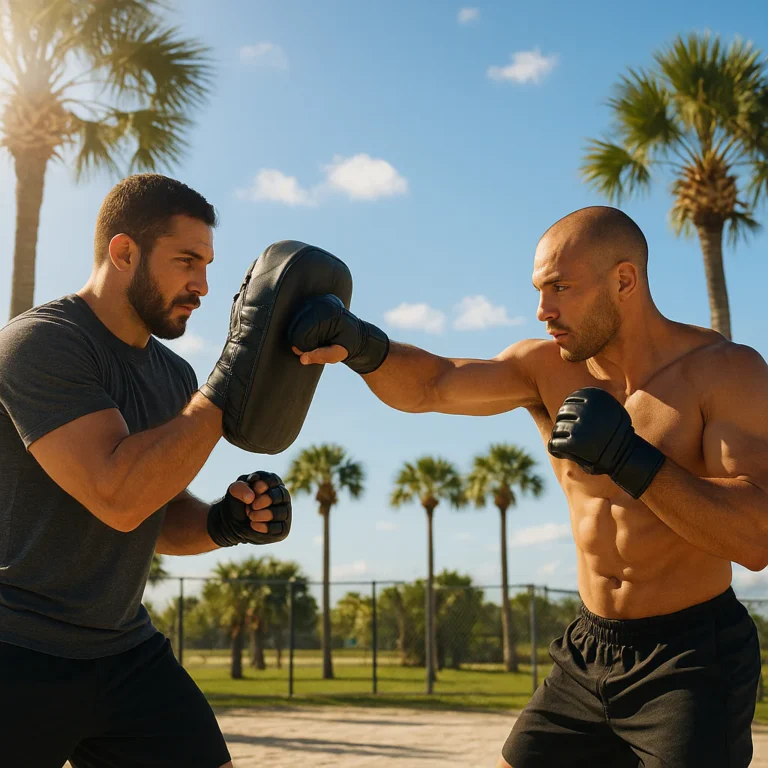
- Pad Work: For timing and accuracy.
- Clinch Drills: For neck strength and knee control.
The Conditioning
- Shin Conditioning: Running on sand, kicking heavy bags, and rolling the shins.
- Neck Strength: To withstand clinch pressure.
- Cardio: MMA is a high-intensity sport. You need to be able to go 5 rounds at 10%.
The Path to Mastery
It takes years to master. You start with the basics, then move to combinations, then to sparring, and finally to competition.
- We’ve seen this in Florida: Just like learning to surf at Clearwater Beach, you start with the small waves and work your way up. You can’t just jump into the big waves without training. For more on Florida’s hidden gems, check out our Beach Escapes category.
🌟 Top 7 Legendary Fighters Who Defined the Evolution of Striking
Let’s honor the legends who shaped the way we strike today.
- Anderson Silva: The “Spider” is the master of the Muay Thai clinch and the front kick. He showed how to use distance and timing to dominate opponents.
- Jose Aldo: The “King of the WEC” brought Dutch Kickboxing to the MMA world. His low kicks and combinations were a blueprint for future fighters.
- Anthony Pettis: The “Showtime” fighter who blended Taekwondo, Muay Thai, and Wrestling to create a unique style.
- Georges St-Pierre: The master of hybrid striking. He blended Karate, Boxing, and Muay Thai to become one of the greatest of all time.
- Israel Adesanya: The “Last Stylebender” who uses Kickboxing footwork and Muay Thai knees to dominate the middleweight division.
- Stephen Thompson: The “Wonderboy” who brought Karate and Kickboxing to the UFC, showing that a pure striker can survive in the cage.
- Dustin Poirier: The “Diamond” who evolved from a boxer to a hybrid striker, incorporating Muay Thai elbows and kickboxing combinations.
Did you know? Many of these fighters have trained at gyms like Evolution MMA Chicago, which offers classes in both Muay Thai and Kickboxing. You can check out their Muay Thai / Kickboxing Class to see how they train.
❓ Frequently Asked Questions About Muay Thai and Kickboxing in MMA
How does Muay Thai striking differ from kickboxing in modern MMA?
Muay Thai emphasizes the use of elbows, knees, and the clinch, while kickboxing focuses on punches and kicks with less clinch work. In MMA, the clinch is crucial for takedown defense, making Muay Thai more versatile.
What are the key striking techniques from Muay Thai used in the UFC?
The low kick, elbow strikes, knees from the clinch, and the tep (push kick) are the most common Muay Thai techniques used in the UFC.
Why do MMA fighters prefer Muay Thai over kickboxing for clinch work?
Because the clinch is a dominant position in MMA. Muay Thai fighters are trained to control the opponent’s head and deliver knees, which is essential for takedown defense and finishing fights.
Can kickboxing rules be effectively adapted for mixed martial arts?
Yes, but they need to be adapted. Kickboxers must learn to check kicks and defend takedowns, which are not part of traditional kickboxing rules.
What are the historical origins of Muay Thai and kickboxing in MMA?
Muay Thai originated in Thailand as a battlefield art, while kickboxing was developed in Japan and the Netherlands as a hybrid of Karate and boxing. Both were brought to the US and adapted for MMA.
How has the evolution of MMA striking changed the role of the clinch?
The clinch has become a critical position for takedown defense and striking. It’s no longer just a pause; it’s a weapon.
Which striking style offers better defense against takedowns in MMA?
Muay Thai offers better defense against takedowns due to the clinch control and knee strikes that can keep opponents at bay.
🏁 Conclusion: The Final Verdict on the Striking Evolution
So, we’ve journeyed from the ancient battlefields of Thailand to the high-tech cages of the UFC. We’ve seen how Muay Thai and Kickboxing have collided, clashed, and ultimately merged to create the modern MMA striker.
The answer to our earlier question—which style is better?—is that neither is superior on its own. The evolution of MMA striking has proven that the hybrid is the ultimate weapon. You need the power of the Muay Thai low kick, the speed of the Dutch combination, and the adaptability to handle the threat of a takedown.
For the aspiring fighter, the path is clear: train both. Don’t limit yourself to one style. Embrace the eight limbs of Muay Thai and the fluid combinations of Kickboxing. And remember, just like the hidden treasures of Florida, the best striking techniques are often found in the unexpected places.
Whether you’re a fan of the clinch or the kick, the evolution of MMA striking is a testament to the human spirit’s ability to adapt and overcome. So, next time you watch a fight, look for the hybrid in action. You might just see the future of striking.
Final Thought: The evolution of MMA striking is not over. It’s still evolving, and the next great fighter is out there right now, training in a gym like Evolution MMA Chicago, blending styles, and pushing the boundaries of what’s possible.
🔗 Recommended Links for Aspiring Strikers
Ready to start your own striking journey? Here are some top resources and products to get you started.
Essential Gear
- MA Gloves: Amazon Search for MMA Gloves | Brand Official
- Shin Guards: Amazon Search for Shin Guards | Brand Official
- Heavy Bag: Amazon Search for Heavy Bag | Brand Official
Training Resources
- Online Courses: Udemy MMA Striking Courses | YouTube Channels
- Books: The Art of Muay Thai on Amazon | Kickboxing for MMA on Amazon
Gyms and Classes
- Evolution MMA Chicago: Muay Thai / Kickboxing Class
- Local Florida Gyms: Check our Local Insights for top-rated gyms in the Sunshine State.
📚 Reference Links and Historical Sources
For those who want to dive deeper into the history and science of striking, here are some reliable sources:
- UFC Official Site: UFC Striking Analysis
- Muay Thai Association: World Muay Thai Council
- Kickboxing History: Glory Kickboxing
- Academic Studies: Journal of Sports Science and Medicine
- Evolution MMA Chicago: Muay Thai / Kickboxing Class
Remember: The evolution of MMA striking is a living history. Keep learning, keep training, and keep evolving.