Support our educational content for free when you purchase through links on our site. Learn more
🌴 10 All-Inclusive Florida Historical City Tours to Explore

All-inclusive Florida historical city tours are easiest to enjoy when you check exactly what’s bundled: some include a guide and attraction entry, while others cover transport, food tastings, or even overnight stays. For a first history-focused getaway, we recommend starting in St. Augustine, then choosing a walking tour, trolley ride, or attraction package that fits your pace and interests.
Florida’s history isn’t confined to one old street or one famous fort. From St. Augustine’s colonial landmarks to Ybor City’s cigar-making heritage and Miami Beach’s Art Deco architecture, each city offers a different story—and “all-inclusive” can mean something different at every stop.
We’ve seen visitors plan a full day around a tour that turned out to include the guide but not the attraction tickets. A quick check of inclusions, meeting points, walking distance, and cancellation rules can save you a surprise detour—and leave more time for the stories you came to hear.
Key Takeaways
- Start with St. Augustine for a concentrated mix of historic sites, guided walks, trolley tours, and specialty experiences.
- Compare inclusions carefully: “all-inclusive” may cover only the tour itself, not meals, admissions, transport, or lodging.
- Choose your city by story: Tallahassee, Pensacola, Key West, Tampa, Miami, Fernandina Beach, Cedar Key, Mount Dora, and St. Petersburg each offer a distinct historical angle.
- Confirm current schedules and resident discounts directly with operators. Tours, promotions, and free seasonal walks can change.
- Plan for Florida conditions: comfortable shoes, water, sun protection, and weather flexibility make history touring much more pleasant.
Table of Contents
- ⚡️ Quick Tips and Facts
- 🧭 What “All-Inclusive” Means for Florida Historical City Tours
- What’s Usually Included—and What May Cost Extra
- Guided Tours, Vacation Packages, and Cruise Excursions Compared
- 🏛️ Florida’s Historic Cities: A Short History and Travel Guide
- Indigenous, Spanish, British, and American Heritage
- Historic Districts, Landmarks, and Preservation
- 🌴 Best All-Inclusive Florida Historical City Tours
- 1. St. Augustine: Castillo de San Marcos, Old Town, and Flagler-Era Grandeur
- 2. Tallahassee: Florida’s Capital, Historic Capitol, and Mission San Luis
- 3. Pensacola: Forts, Colonial History, and Historic Village
- 4. Key West: Old Town, Ernest Hemingway’s Home, and Maritime History
- 5. Tampa: Ybor City, Cuban Heritage, and Historic Architecture
- 6. Miami: Art Deco, Little Havana, and Multicultural History
- 7. Fernandina Beach: Fort Clinch and Amelia Island’s Historic Downtown
- 8. Cedar Key: Gulf Coast History, Museums, and Old Florida Charm
- 9. Mount Dora: Historic Downtown, Museums, and Small-Town Florida
- 10. St. Petersburg: Historic Neighborhoods, Museums, and Waterfront Heritage
- 🚶 St. Augustine Walking Tours and Sightseeing Options
- Historic Walking Tours, Trolley Tours, and Guided Attractions
- Choosing a Reputable St. Augustine Tour Company
- 🎉 Free Historic Walking Tours and America’s 250th Anniversary
- Finding Free and Pay-What-You-Wish Tours
- Planning a 2026 Semiquincentennial History Trip
- 🚌 Popular Florida History Tours Beyond the City Center
- Fort Tours, Plantation History, and Historic Homes
- Museums, Heritage Trails, and Cultural Experiences
- 💳 Florida Resident Discounts, Passes, and Savings
- How to Find Resident Rates and Seasonal Offers
- Tour Passes, Attraction Bundles, and What to Check Before Buying
- 🗓️ How to Plan an All-Inclusive Florida History Getaway
- Best Time of Year and How Many Days to Stay
- Getting Around: Walking, Trolleys, Trains, and Rental Cars
- Hotels, Meals, and Package-Inclusion Checklists
- Accessibility, Families, and Different Travel Styles
- 🎒 What to Bring and How to Tour Comfortably
- Florida Heat, Rain, Sun, and Comfortable Walking Shoes
- Tour Etiquette, Photography, and Historic-Site Rules
- ✅ How to Compare and Book Florida Historical City Tours
- Questions to Ask Before You Reserve
- Cancellation Policies, Group Sizes, and Accessibility Details
- Conclusion
- Recommended Links
- FAQ
- Reference Links
⚡️ Quick Tips and Facts
First, a useful distinction: “all-inclusive” isn’t a standard label for Florida history tours. It might mean a guided tour with admission included, a food-tasting walk, a sightseeing pass, or an overnight package bundling hotel stays and activities. Check the inclusions before you book—and if you’re planning a broader trip, our guide to all-inclusive Florida getaways can help you connect the history stops with the rest of your Sunshine State escape.
| Quick fact | What to know |
|---|---|
| Best place to start | St. Augustine offers a particularly rich mix of Spanish colonial landmarks, guided walks, trolley tours, museums, and food experiences. |
| Other strong history stops | Consider Tallahassee, Pensacola, Key West, Tampa’s Ybor City, Miami’s Art Deco District, and Fernandina Beach. |
| What “all-inclusive” may cover | Guide, transportation, attraction entry, food tastings, or accommodations—not necessarily all of them. |
| Free tour possibility | Tour St. Augustine has advertised a free July walking tour, but schedules and reservation requirements can change. Verify current details directly before setting out. |
| Best booking habit | Ask for a written list of inclusions, exclusions, duration, meeting point, accessibility details, and cancellation terms. |
| Florida reality check | Heat, sudden rain, uneven historic streets, and limited shade can turn a leisurely walking tour into a sweaty expedition. Bring water and plan breaks. |
Our local take: St. Augustine is the easiest city for a first-time visitor to build a history-focused itinerary around, while Tampa, Miami, and Key West offer compelling stories that are less concentrated in one small historic core. For more ideas from our team, browse Local Insights and Family Adventures.
🧭 What “All-Inclusive” Means for Florida Historical City Tours
When a tour operator says “all-inclusive,” don’t assume that phrase means hotel, meals, transport, attraction admissions, and tips are all covered. Some experiences include a guide and several food tastings; others bundle multiple attractions into a pass. Vacation packages may add lodging, but the fine print does the heavy lifting.
The St. Augustine tourism bureau’s tour-services directory lists a broad mix of guided history walks, cart and trolley tours, land-and-sea excursions, food tours, and specialty experiences. That variety is useful, but it also shows why comparing the word “all-inclusive” alone doesn’t tell you what you’ll actually receive.
What’s Usually Included—and What May Cost Extra
| Tour type | Often included | Confirm before booking |
|---|---|---|
| Guided walking tour | Guide and route | Attraction admission, gratuity, water, rest breaks, accessibility |
| Trolley or cart tour | Vehicle ride and guide commentary | Hop-on access, parking, individual attraction tickets, pickup limits |
| Food and wine tour | Guide and selected tastings | Full meals, extra drinks, dietary substitutions, gratuity |
| Atraction pass | Entry to a defined selection of sites or tours | Reservations, blackout dates, transport, time limits, individual attraction availability |
| Day package | A coordinated set of activities, sometimes transport | Meals, admission, transfers, schedule changes |
| Overnight vacation package | May combine a hotel stay and selected experiences | Taxes, resort fees, meals, parking, transport, add-on activities |
A practical booking checklist:
- List every included item. “Three tastings” is clearer than “culinary experience.”
- Ask what’s excluded. Parking, tips, extra admissions, and drinks can add up.
- Check the actual schedule. A pass may cover entry but still require timed reservations.
- Confirm the meeting point. Historic districts can be confusing, and some streets are closed to regular traffic.
- Get cancellation rules in writing. Weather policies can differ between walking, boat, and vehicle tours.
Guided Tours, Vacation Packages, and Cruise Excursions Compared
| Option | Best for | Main advantage | Trade-off |
|---|---|---|---|
| Single guided tour | Travelers who want one focused experience | Simple to compare and schedule | Usually covers only one subject or area |
| Multi-atraction pass | Visitors planning several paid stops | Convenient access and potential bundled value | The pass may not include transport or every popular site |
| Custom vacation package | Families, reunions, and longer stays | Activities can be coordinated around your group | Inclusions and flexibility vary widely |
| Cruise excursion | Port visitors on a fixed timetable | Organized transport and a return-to-ship plan | Less free time; pickup and return windows matter |
| Self-guided day | Independent travelers | Flexible pace and route | You do the research, navigation, and ticket coordination |
Our recommendation: If you’re staying only one day, book one well-matched guided experience and leave breathing room around it. A packed itinerary looks heroic on paper. In Florida humidity, it may feel more like a history-themed obstacle course.
🏛️ Florida’s Historic Cities: A Short History and Travel Guide
Florida’s history is not one tidy timeline with a single cast of characters. It includes Indigenous nations, Spanish and British colonial rule, African American history, Cuban and Caribbean migration, military outposts, maritime trade, and the modern communities that preserve—and debate—those stories.
For an overview of the state’s heritage and historic places, explore the Florida Department of State’s Division of Historical Resources. The National Park Service also maintains information on Florida’s national parks, historic sites, forts, and cultural resources.
Indigenous, Spanish, British, and American Heritage
Florida’s Indigenous history reaches back thousands of years, long before European settlements. Spanish colonization began in the 16th century; British rule and later U.S. governance reshaped the peninsula again. Historic tours often focus on colonial forts and architecture, but the fuller story also asks whose land was occupied, whose labor built institutions, and whose accounts survived in the records.
In St. Augustine, Spanish colonial history is especially visible around the historic district and Castillo de San Marcos National Monument. In Tallahassee, Mission San Luis interprets a 17th-century Spanish mission and the Apalache community connected to it. In Tampa, Ybor City tells a different story, shaped by cigar manufacturing and Cuban, Spanish, and immigrant communities.
A good guide makes room for complexity. If a tour treats every landmark as a quaint backdrop and skips the people who lived and worked there, ask what other routes or guides are available.
Historic Districts, Landmarks, and Preservation
| Place | What makes it notable | Useful starting point |
|---|---|---|
| St. Augustine | Colonial streets, Castillo de San Marcos, Spanish and British-era heritage | National Park Service |
| Tallahassee | Mission history, state government, historic districts | Mission San Luis |
| Pensacola | Gulf Coast fortifications and layered colonial history | National Park Service: Gulf Islands |
| Tampa’s Ybor City | Cigar-industry heritage and immigrant communities | Ybor City Museum State Park |
| Miami Beach | A globally recognized concentration of Art Deco architecture | Miami Design Preservation League |
| Key West | Maritime, military, literary, and residential heritage | Key West Historic District information |
Historic sites are living places, not movie sets. Follow posted rules, respect residents, and remember that preservation can involve difficult questions about development, interpretation, and community identity.
🌴 Best All-Inclusive Florida Historical City Tours
“Best” depends on your trip: a short walking tour can be ideal for history buffs, while families may prefer a trolley plus a museum stop. These cities are strong candidates for a guided history itinerary, but verify which offerings are currently available and what each actually includes.
1. St. Augustine: Castillo de San Marcos, Old Town, and Flagler-Era Grandeur
St. Augustine is the obvious starting point for many Florida history trips—and for good reason. Its compact historic center brings colonial architecture, museums, landmarks, and guided experiences close together. That doesn’t mean every attraction is automatically bundled into a tour.
Look for:
- Walking history tours covering the old city, architecture, and colonial context.
- Trolley and electric-cart tours when you want to cover more ground or limit walking.
- Flagler-era tours focused on the city’s late-19th-century development and landmark hotels.
- Land-and-sea tours combining historic commentary with a water view.
- Food and wine walks that pair local history with tastings.
The local tourism bureau describes its tour scene as a way to find the city’s “nooks and crannies” and “hidden gems.” That’s a fair pitch: a guide can explain what a building was before you’ve finished admiring its balcony.
The directory for Ancient City Tours describes the company as operating St. Augustine experiences since 1998, including a family- and pet-friendly walking history tour and customized group options. It also lists ghost and paranormal tours. Those are the operator’s own service descriptions, so confirm current routes, accessibility, and inclusions directly.
If you want an overview before choosing stops, the featured St. Augustine travel guide video covers 18 things to do in the city, from the perspective of the creators at Follow Me Away. It can help you spot candidate attractions, but check current opening information and ticket details with each official site.
2. Tallahassee: Florida’s Capital, Historic Capitol, and Mission San Luis
Tallahassee is a smart choice if you’re curious about the state’s political history as well as its colonial and Indigenous heritage. Include the Florida Historic Capitol Museum and Mission San Luis in your research. The mission interprets the 17th-century Spanish Apalache community through reconstructed structures and exhibits.
Why it works: You can pair a state-government visit with a site that broadens the story beyond capitol buildings and famous officeholders.
What to check: Opening days, special-event schedules, guided-tour availability, and the distance between stops. Tallahassee is less of a compact, single-district stroll than St. Augustine.
3. Pensacola: Forts, Colonial History, and Historic Village
Pensacola’s Gulf Coast location made it a strategic military and maritime center. A visit to Gulf Islands National Seashore can add fort and coastal context; the National Park Service publishes current site information, access details, and alerts.
A useful pairing: Explore downtown or a local museum, then plan a separate visit to the fort area. Don’t assume a city walking tour includes transportation to a national seashore site.
4. Key West: Old Town, Ernest Hemingway’s Home, and Maritime History
Key West’s history is layered with maritime trade, military presence, architecture, writers, and island life. Guided walking tours are a natural fit for Old Town, while museums and historic homes offer more focused visits. Check official attraction information for current admission, hours, and access before you plan around a particular stop.
Local-planning tip: Key West’s compact center is walkable, but heat and frequent rain showers can make early starts and indoor breaks a wise combination. If you’re also planning a coastal escape, browse our Beach Escapes guide.
5. Tampa: Ybor City, Cuban Heritage, and Historic Architecture
Tampa’s Ybor City is one of Florida’s most distinctive historic neighborhoods. The Ybor City Museum State Park offers context for the area’s cigar-making past and the communities that shaped it.
Choose a tour that gives time to walk the neighborhood rather than just roll past it. Look for coverage of immigrant workers, cigar factories, social clubs, and the area’s Cuban heritage—not only the colorful storefronts.
6. Miami: Art Deco, Little Havana, and Multicultural History
Miami’s historic experiences are spread across multiple neighborhoods, so choose a theme before choosing a tour:
- Art Deco architecture: Miami Beach’s historic district is a strong fit for a guided design walk. The Miami Design Preservation League offers information about preservation and local architecture.
- Cuban and Caribbean heritage: Little Havana walks can connect food, music, migration, and neighborhood history.
- Black history: Seek tours and cultural institutions that center the communities and landmarks involved, rather than treating Miami’s history as only beach hotels and nightlife.
- Downtown history: Combine architecture and waterfront development with a museum visit.
Trade-off: Miami offers a wider range of cultural stories than a single tour can cover. A focused neighborhood walk usually beats a rushed citywide overview.
7. Fernandina Beach: Fort Clinch and Amelia Island’s Historic Downtown
Fernandina Beach pairs a walkable historic downtown with the fort and natural setting of Fort Clinch State Park. This is a good choice for travelers who want history with room to breathe—and perhaps a beach day on the same trip.
Check park information for current access and programming. A downtown walking tour and a fort visit may be separate experiences, so verify transportation and admission.
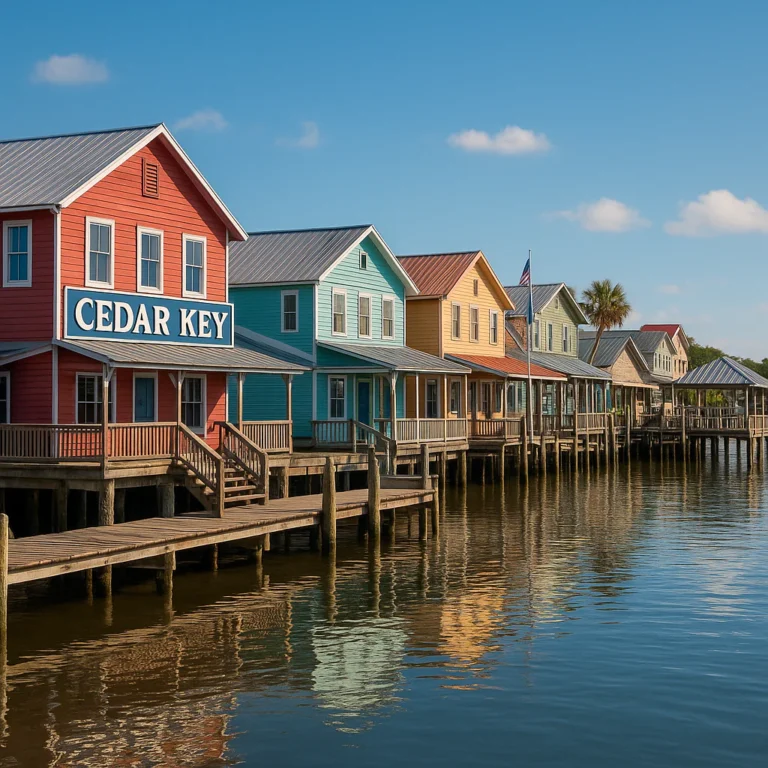
8. Cedar Key: Gulf Coast History, Museums, and Old Florida Charm
Cedar Key suits travelers looking for a quieter, small-town history stop rather than a large guided-tour menu. Research local museum schedules and seasonal access before making it the centerpiece of a tightly timed trip.
Best for: Slow travel, coastal scenery, and a flexible day that leaves space for local stories.
Less ideal for: Visitors expecting frequent scheduled tours, extensive public transit, or a major attraction pass.
9. Mount Dora: Historic Downtown, Museums, and Small-Town Florida
Mount Dora’s historic downtown is a pleasant option for a relaxed walking day, with local shops, cultural stops, and a different pace from the state’s larger destinations. Check the city’s visitor information for current events and local planning details.
It’s a good add-on for a Central Florida trip, especially if your group wants a historic town without making the whole vacation revolve around museums.
10. St. Petersburg: Historic Neighborhoods, Museums, and Waterfront Heritage
St. Petersburg combines historic neighborhoods, waterfront landmarks, museums, and architecture. The City of St. Petersburg provides local information, while museums and neighborhood organizations can help you choose a route that matches your interests.
Planning reality: Stops are spread out. A guided neighborhood walk may be easier than trying to stitch together several districts on foot in one afternoon.
🚶 St. Augustine Walking Tours and Sightseeing Options
Historic Walking Tours, Trolley Tours, and Guided Attractions
St. Augustine’s tour options range from inexpensive public walking tours to private carts, food walks, and multi-atraction passes. The official area tour-services directory is a useful starting point, but treat directory listings as a shortlist—not a substitute for confirming details with the operator.
| Experience | Consider it if you… | Ask before booking |
|---|---|---|
| Walking history tour | Want street-level context and a focused route | How long, how much walking, and whether there are steps or uneven surfaces |
| First Coast Cart Tours | Prefer a small-group or vehicle-assisted tour | Exact pickup area, route, accessibility, and whether gratuity is included |
| St. Augustine Land and Sea Tours | Want a mix of city and water views | What portion is on land, what portion is on the water, and weather rules |
| Flagler Legacy Tours | Are interested in Henry Flagler’s influence and landmark architecture | Which buildings are visited and whether entry is included |
| Gold Tours | Prefer a private or customized downtown experience | Group size, route flexibility, and total duration |
| Ancient City Tours | Want educational, family, group, or specialty options | Current itinerary, age suitability, meeting point, and what the package includes |
| City Walks Food & Wine Tours | Want history served alongside tastings | Dietary accommodations, included tastings, and whether a meal is included |
| Ghost City Tours | Enjoy atmospheric storytelling after dark | How the tour distinguishes documented history from legend |
A historical tour and a ghost tour can both be entertaining, but they don’t make the same promise. For historical accuracy, ask whether the guide separates documentary evidence from local folklore. For a theatrical evening, decide how spooky you want your stories served.
Choosing a Reputable St. Augustine Tour Company
Use this quick check before paying:
- ✅ The operator clearly states the duration, route, meeting point, and inclusions.
- ✅ Current operating details appear on the company’s own website or are confirmed by staff.
- ✅ Reviews mention the kind of experience you want—not just star ratings.
- ✅ The company explains cancellation, rain, and accessibility policies.
- ❌ The listing uses “all-inclusive” but won’t itemize what’s included.
- ❌ The tour relies on historic-sounding claims without identifying what is documented and what is legend.
The St. Augustine tourism bureau lists operators and tour styles, while the Florida Historic Coast directory entry for Ancient City Tours describes its walking, family, group, and paranormal offerings. These are useful discovery sources; verify dates, packages, availability, and terms with the tour company directly.
🎉 Free Historic Walking Tours and America’s 250th Anniversary
Finding Free and Pay-What-You-Wish Tours
Tour St. Augustine’s published information has described a free July walking tour, “St. Augustine & the Birth of America,” focused on East Florida during the American Revolution. According to the operator’s listing, the tour runs for about an hour and requires advance reservations; the schedule and availability can change.
Before you go, contact the operator directly. Confirm the date, start time, departure address, reservation process, group limits, and whether the tour is operating this season. A page showing last summer’s schedule isn’t proof of this summer’s schedule—Florida calendars have a way of aging faster than a palm frond in a storm.
The tour description offers a perspective that may surprise visitors: East Florida remained loyal to the British Crown during the Revolutionary War, and St. Augustine’s role differed from that of many American independence sites. That context is a good reason to seek out guides who explain competing loyalties rather than flatten the era into a simple heroes-and-villains story.
Planning a 2026 Semiquincentennial History Trip
The United States marks the 250th anniversary of the Declaration of Independence in 2026. For background on the national commemoration, see America250 and the National Archives’ Declaration of Independence resources.
For a Florida history trip, focus on context rather than expecting every site to host a special program:
- Check official event calendars for museums, historic districts, and city tourism organizations.
- Ask whether special tours require reservations.
- Build in time for exhibits, not only walking routes.
- Compare perspectives. Florida’s colonial history includes Spanish, British, Indigenous, African American, and later immigrant experiences.
- Reconfirm schedules close to your visit, especially for free community tours.
If a themed tour is unavailable, you can still create a meaningful itinerary with a guide-led walk, an official historic site, and time to explore the neighborhood at your own pace.
🚌 Popular Florida History Tours Beyond the City Center
Fort Tours, Plantation History, and Historic Homes
Some of Florida’s most memorable history stops sit outside downtown cores. Forts, historic houses, state parks, and archaeological sites may require separate transport and admission, so check each site’s official information before you set a timetable.
- Castillo de San Marcos: Consult the National Park Service for official visitor information.
- Fort Clinch: Check Florida State Parks for access and park details.
- Mission San Luis: Review the site’s official visitor information.
- Ybor City Museum State Park: Check Florida State Parks.
- Historic homes: Confirm whether tours are guided, timed, limited to certain rooms, or unavailable on specific days.
When researching plantation-era sites, look for interpretation that addresses enslaved people, labor, land ownership, and descendants, not just architecture or the lives of wealthy owners. A responsible visit doesn’t avoid difficult history; it puts it in context.
Museums, Heritage Trails, and Cultural Experiences
Museums and cultural institutions can add depth to a walking tour, particularly when a city’s heritage is spread across neighborhoods. Look for:
- Local history museums and city archives.
- Indigenous, Black, Cuban, Caribbean, and immigrant heritage institutions.
- Historic districts with interpretation panels or official walking routes.
- Architecture tours focused on preservation and design.
- Food tours that explain the communities behind regional dishes.
- National and state parks with ranger-led or scheduled programs.
For trip ideas beyond the history trail, our Budget-friendly Trips and Family Adventures sections can help you build a day that works for different interests and energy levels.
💳 Florida Resident Discounts, Passes, and Savings
How to Find Resident Rates and Seasonal Offers
Some St. Augustine operators have advertised Florida-resident offers, including discounts on selected ghost tours and food tours. One operator’s published material has also described a free seasonal history walk. These offers are time-sensitive, and the details can change, so don’t rely on a copied coupon code or an old blog listing.
To check eligibility and terms:
- Visit the tour operator’s official website.
- Look for a current Florida-resident promotion.
- Ask which identification is accepted.
- Confirm whether the offer applies to every departure, only online bookings, or specific dates.
- Check whether the discount can be combined with a pass or another offer.
TourPass of St. Augustine has been described by the local tourism bureau as a multi-atraction option that may offer savings across participating tours and attractions. Its actual value depends on which experiences you plan to use, their current availability, and pass conditions. Review the tour-services directory, then check the pass provider’s current terms before buying.
Tour Passes, Attraction Bundles, and What to Check Before Buying
Use this simple comparison:
| Check | Why it matters |
|---|---|
| Included attractions | A pass may not cover the sites you care about most. |
| Reservation requirements | “Included” doesn’t always mean walk-up access. |
| Validity window | A short pass window can be a poor fit for a relaxed trip. |
| Transport | Admission bundles may not include a trolley, ride, or parking. |
| Blackout dates and capacity | Popular departure times may fill up. |
| Unused attractions | A pass only helps if you’ll use enough of its included options. |
| Refund terms | The rules may differ from individual tour bookings. |
Our rule: Make a shortlist of experiences first, then compare the pass. Buying a bundle before choosing what you want is like ordering the sampler platter and discovering you’re allergic to half the menu.
🗓️ How to Plan an All-Inclusive Florida History Getaway
Best Time of Year and How Many Days to Stay
| Trip style | Suggested planning approach |
|---|---|
| One-day visit | Choose one guided tour and one or two nearby stops. Leave a meal and rest break unscheduled. |
| Weekend escape | Add a second neighborhood, museum, or specialty tour. Keep one flexible block for weather. |
| Three-day history trip | Focus one city and include both guided and self-paced visits. |
| Multi-city route | Allow travel time between destinations; Florida’s map can make neighboring-looking places seem deceptively close. |
Florida weather is seasonal but never entirely predictable. For current forecast alerts, check the National Weather Service. Summer visitors should plan for heat, humidity, and afternoon storms; cooler months are often more comfortable for long walking routes, though popular dates may require early reservations.
Getting Around: Walking, Trolleys, Trains, and Rental Cars
Choose transport based on the itinerary, not just the city name.
- Walking: Best for compact historic districts, but check surfaces, shade, and distance.
- Trolley or guided cart: Helpful for covering multiple stops or reducing continuous walking.
- Rental car: Useful forts, parks, and multi-city trips; parking may be limited in historic centers.
- Water tours: A scenic way to add context, but weather and operating schedules can affect departures.
- Public transit and rideshares: Convenient in some metro areas, less useful for certain outlying sites.
For more on finding a place to stay near your chosen route, browse our Accommodation Reviews. Staying near the historic core can save time, but compare noise, parking, and accessibility—not just map distance.
Hotels, Meals, and Package-Inclusion Checklists
Before booking an overnight package, confirm:
- The hotel’s exact location and room type.
- Whether breakfast or other meals are included.
- Whether tour reservations are guaranteed or merely suggested.
- How you’ll get between the hotel, attractions, and tour meeting points.
- Whether parking, resort fees, and taxes are covered.
- Whether the package allows schedule changes.
- Any age, mobility, or dietary restrictions.
A “romantic retreat” or “family getaway” label tells you the intended mood, not the fine print. Ask the operator to itemize what the package includes.
Accessibility, Families, and Different Travel Styles
Historic streets may have uneven pavement, narrow sidewalks, steps, and limited shade. Before booking, ask:
- Is the route wheelchair accessible?
- Are there stairs, coblestones, or long stretches without seating?
- Can the guide adapt the route or pace?
- Are service animals welcome?
- Are children expected to remain with the group for the whole tour?
- Are bathrooms and water stops available?
- Can the tour accommodate mobility devices or dietary needs?
Ancient City Tours’ directory listing describes its walking history tour as family- and pet-friendly, but confirm the current policy and route suitability directly. “Family-friendly” can mean a guide welcomes children; it doesn’t necessarily mean every surface or story suits every age.
🎒 What to Bring and How to Tour Comfortably
Florida Heat, Rain, Sun, and Comfortable Walking Shoes
A few sensible choices make a history walk far more enjoyable:
- Comfortable, broken-in walking shoes with grip.
- Refillable water bottle.
- Sun protection: hat, sunglasses, and sunscreen.
- Compact rain layer or umbrella when the forecast calls for showers.
- Light clothing and a small bag that won’t become an oven on your shoulder.
- A phone charger if you’ll use maps, tickets, or audio guides.
- Any medication or mobility aid you rely on.
The Centers for Disease Control and Prevention advises taking heat seriously and using practical precautions such as staying hydrated and limiting strenuous activity in extreme heat. Check the forecast and heat alerts before heading out; a shaded museum break is a perfectly respectable part of a cultural itinerary.
Tour Etiquette, Photography, and Historic-Site Rules
- Arrive early enough to find the meeting point without sprinting through a historic district.
- Ask before photographing people, private homes, or sensitive sites.
- Follow rules on flash photography, food, bags, and restricted areas.
- Keep voices respectful during cemetery and memorial visits.
- Don’t touch fragile artifacts or climb on historic structures.
- If the guide shares a local story that sounds uncertain, ask whether it’s documented history, oral tradition, or folklore.
Respectful curiosity makes you a better visitor—and often gets you a better conversation with the guide.
✅ How to Compare and Book Florida Historical City Tours
Questions to Ask Before You Reserve
Copy this checklist into your notes:
- What exactly is included in the booking?
- Which admissions, tastings, or transport are not included?
- How long is the experience, and how much walking is involved?
- Where is the meeting point, and is pickup available?
- What happens if it rains or a boat trip is canceled?
- Are reservations required for attractions included in a pass?
- Can the guide adapt the tour for children or mobility needs?
- How large is the group?
- What is the cancellation or rescheduling policy?
- Does the guide distinguish documented history from legend?
Cancellation Policies, Group Sizes, and Accessibility Details
| Booking detail | Why to verify it |
|---|---|
| Cancellation deadline | Refund eligibility can depend on how early you cancel. |
| Weather procedure | Walking tours may continue in light rain; water tours may not. |
| Minimum group size | Small operators may change or combine departures. |
| Maximum group size | A large group can affect how well you hear and ask questions. |
| Accessibility | “Accessible” can mean different things for a vehicle, building, and walking route. |
| Late-arrival policy | The group may leave on time, especially for timed admissions. |
| Final inclusions | Save the confirmation showing what you purchased. |
A tour can be excellent and still be the wrong fit for your group. The best booking is the one whose route, pace, content, and logistics match the travelers who’ll actually be there.